PSHE at Ellington Primary School
At Ellington Primary School, our PSHE curriculum helps children to grow into confident, caring and responsible members of our school community. It supports pupils to develop the knowledge, skills and attitudes they need to thrive, both in school and in later life.
Through PSHE, children learn about friendships, emotions, respect, healthy choices, online safety, physical and mental wellbeing, and how to keep themselves and others safe. As part of this, Relationships and Sex Education (RSE) is taught sensitively, carefully and in an age-appropriate way, in line with statutory guidance. Our curriculum is thoughtfully planned and adapted to meet the needs of each year group, ensuring that learning is meaningful and appropriate for every child.
Our school values of pride, resilience, trust, respect, honesty and happiness are at the heart of everything we do. They shape how we learn, how we treat one another and how we prepare children for the wider world. PSHE helps pupils to live out these values every day by building positive relationships, making thoughtful choices and developing confidence in themselves and others.
We believe that children learn best when school and home work together, so we value open communication and partnership with parents and carers.
If you would like to find out more about PSHE and RSE at Ellington Primary School, please contact the school office and we will be happy to help.
Statutory Framework PSHE and RSE 2026
PSHE S-Plan
Year 1 End Points
FAQ for parents and carers:
What are PSHE and RSE?
PSHE stands for Personal, Social, Health and Economic Education. It helps children develop the knowledge, skills and understanding they need to look after themselves, build positive relationships, stay safe and become confident, responsible members of their community.
RSE stands for Relationships and Sex Education. At primary school, this focuses primarily on relationships, families, friendships, respect, personal boundaries, safety and growing up.
Our school uses the Kapow Primary RSE & PSHE scheme of learning to support our curriculum. Kapow's programme has been updated for the revised Department for Education (DfE) guidance introduced from September 2026.
Why does my child have PSHE and RSE lessons?
These lessons help children develop skills and knowledge that they need both in school and in everyday life.
Children learn how to:
-
understand and manage their emotions;
-
develop positive and respectful relationships;
-
communicate effectively;
-
recognise and respect personal boundaries;
-
keep themselves safe, both online and offline;
-
make healthy and informed choices;
-
look after their physical and mental wellbeing;
-
understand how their bodies change as they grow;
-
recognise when something is not right and know how to seek help;
-
understand their rights and responsibilities;
-
appreciate diversity and treat others with respect; and
-
develop confidence and independence.
The DfE states that Relationships Education and Health Education are statutory in primary schools.
What will my child learn?
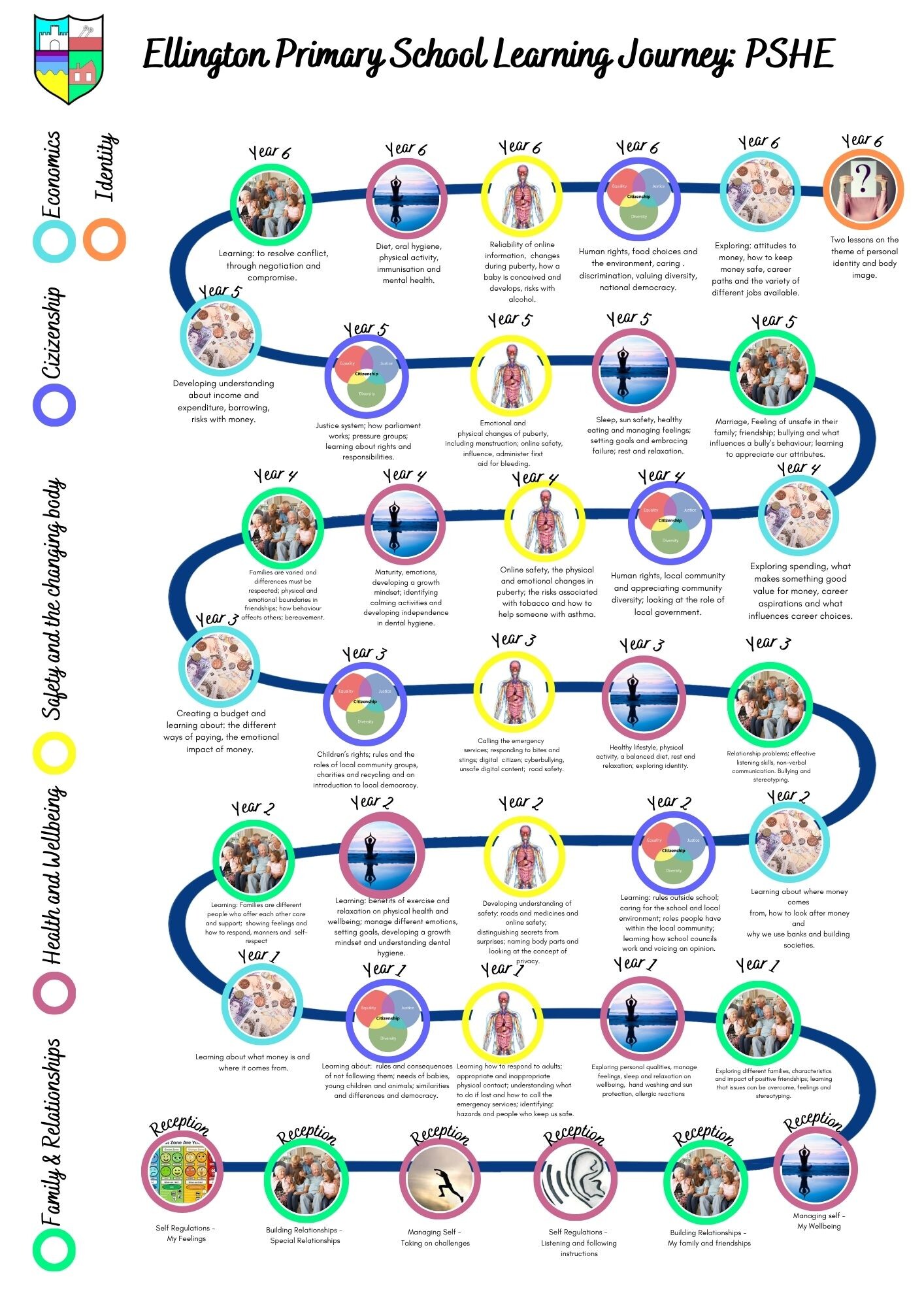
Kapow organises learning around a number of important areas, which are revisited as children progress through primary school.
These include:
Family and relationships:
Children learn about families, friendships, kindness, communication, respect, conflict and healthy relationships.
Health and wellbeing:
Children learn about physical health, mental wellbeing, healthy lifestyles, emotions, sleep, exercise, nutrition and self-care.
Safety and the changing body:
Children learn how to keep themselves safe, personal boundaries, appropriate behaviour, puberty and the physical and emotional changes that happen as they grow.
Citizenship:
Children learn about communities, rules, rights, responsibilities, diversity, fairness and how they can contribute positively to society.
Economic wellbeing:
Children develop an understanding of money, saving, spending, needs and wants, work and making sensible financial decisions.
Identity and transition:
Children develop their understanding of themselves, their strengths and their changing identity, as well as preparing for important transitions such as moving to secondary school.
Kapow revisits key themes throughout primary school so that children's understanding develops gradually and appropriately as they get older.
Is RSE the same as teaching children about sex?
No.
In primary school, Relationships Education and Health Education are statutory. Sex education itself is not statutory at primary level.
Schools may choose to teach some additional, age-appropriate sex education. Where this is included, the school's RSE policy should explain what is taught and parents have specific rights regarding withdrawal from that additional sex education.
Kapow includes an optional Year 6 sex education unit, which schools can choose whether or not to teach. Parents should check our school's RSE policy for details of what our school has decided.
What will children learn about puberty?
Children will learn age-appropriate information about growing and changing.
This includes understanding that:
-
everyone's body develops at its own pace;
-
puberty is a normal part of growing up;
-
bodies change physically and emotionally during puberty;
-
personal hygiene becomes particularly important as children grow;
-
menstruation is a normal biological process;
-
children can ask questions about changes to their bodies; and
-
they should know where to go for reliable information and support.
The DfE specifically expects primary schools to provide appropriate teaching about puberty and menstruation and to prepare children for these changes.
Will children be expected to talk about their own personal experiences?
No.
Children are not expected to disclose personal or family experiences during PSHE or RSE lessons.
Teachers use age-appropriate activities, discussion, stories, scenarios and examples. Children can contribute to discussions without having to share anything personal.
This is particularly important when teaching about relationships, safety, emotions and potentially sensitive subjects. Kapow states that its lessons use impersonal scenarios and pupils are not expected to discuss their own experiences.
How are sensitive subjects taught?
Teachers approach sensitive topics carefully and in an age-appropriate way.
Lessons are planned to:
-
use appropriate and respectful language;
-
provide factual information;
-
avoid unnecessary or inappropriate detail;
-
allow children to ask questions;
-
recognise that children have different experiences and family circumstances;
-
reinforce children's right to feel safe;
-
encourage children to speak to a trusted adult if they are worried.
The aim is to give children the knowledge and skills they need to stay safe and make healthy choices, rather than to worry or frighten them.
Why do children learn the correct names for body parts?
Using accurate language helps children understand their bodies and communicate clearly.
It also supports safeguarding because children need appropriate vocabulary to explain if something has happened that has made them feel uncomfortable, worried or unsafe.
The revised DfE guidance places importance on children developing appropriate knowledge and language around their bodies, personal boundaries and safety.
Will children learn about online safety?
Yes.
Online safety is an important part of the Kapow curriculum.
Children learn about:
-
communicating respectfully online;
-
protecting personal information;
-
recognising online risks;
-
making safe choices;
-
understanding that online behaviour can affect others;
-
recognising when something online makes them uncomfortable or worried; and
-
knowing how and where to seek help.
Online relationships and internet safety form part of the revised DfE expectations for primary pupils.
Will children learn about mental health?
Yes.
Children learn that mental health is an important part of overall health.
They develop an understanding of:
-
different emotions and feelings;
-
strategies for managing everyday challenges;
-
resilience and perseverance;
-
how relationships can support wellbeing;
-
when they may need additional help; and
-
how to talk to a trusted adult when they are worried.
The DfE guidance emphasises helping children recognise when something is not right with their health and encouraging them to seek appropriate support.
Will children learn about healthy eating and exercise?
Yes.
Children learn about making choices that support their physical and mental wellbeing.
This includes learning about:
-
eating a balanced diet;
-
the importance of physical activity;
-
sleep and rest;
-
personal hygiene;
-
dental health;
-
looking after their bodies; and
-
the links between physical health and mental wellbeing.
The intention is to develop healthy habits and understanding, not to encourage children to worry about their weight or appearance. The DfE guidance emphasises health and wellbeing rather than appearance.
Will children learn about drugs, alcohol and smoking?
Children receive age-appropriate health and safety education about substances and the risks associated with them as part of their wider health education.
The focus is on staying safe, understanding health risks, making responsible choices and knowing where to seek help.
The content is carefully adapted to children's age and developmental stage.
How does PSHE and RSE support safeguarding?
PSHE and RSE are important parts of our safeguarding curriculum.
Children learn:
-
that their body belongs to them;
-
about personal space and boundaries;
-
how to recognise behaviour that is inappropriate or unsafe;
-
that they can say no to something that makes them uncomfortable;
-
who they can talk to if they are worried;
-
how to recognise when something does not feel right; and
-
that they should seek help from a trusted adult.
Kapow's curriculum deliberately develops children's confidence in identifying concerns and seeking support as they progress through primary school.
Can I see what my child will be taught?
Yes.
Parents and carers should be able to understand what is being taught and when.
Our school can provide information about the curriculum, including year-group overviews and relevant teaching materials, in accordance with our school policy.
Please contact the school if you would like to discuss the content your child will be learning.
Can I withdraw my child from PSHE or RSE?
Relationships Education and Health Education are statutory elements of the primary curriculum.
The arrangements concerning withdrawal apply specifically to sex education that is not part of the statutory Relationships Education curriculum.
If our school teaches the optional elements of sex education, our RSE policy will explain the content and the arrangements for parents and carers.
If you have questions about withdrawal, please speak to the Headteacher or PSHE/RSE lead.
How can I support my child's learning at home?
Everyday conversations provide excellent opportunities to reinforce PSHE and RSE learning.
You could talk together about:
-
friendships and resolving disagreements;
-
emotions and how your child is feeling;
-
kindness and respect;
-
staying safe online;
-
making healthy choices;
-
personal boundaries;
-
changes as children grow;
-
managing money;
-
helping others and contributing to the community.
You do not need to have all the answers. If your child asks a question that you are unsure about, it is perfectly fine to say that you will find out together.
What if my child asks me a question I don't know how to answer?
Try not to worry.
Children are naturally curious and may ask questions after a lesson or because something has happened in their lives.
You can:
1. Listen carefully to what your child is asking.
2. Answer honestly using language appropriate to their age.
3. Avoid giving more information than they have asked for.
4. Reassure them that it is okay to ask questions.
5. Speak to school if you would like advice about something they have been learning.
What children should know by the time they leave Primary School:
By the end of primary school, pupils should be able to understand themselves, look after their physical and mental health, form positive and respectful relationships, understand boundaries and privacy, recognise unsafe or abusive behaviour, stay safer online and offline, understand puberty and growing up, make informed choices, and know when and how to ask for help.
This reflects the central purpose of the revised DfE guidance: primary education should establish the building blocks of healthy relationships, good health, personal safety and wellbeing before children move into the more complex content of secondary education.
If you're using this for a school curriculum or subject-leader document, I can also turn this into a formal “End of Primary PSHE & RSE Expectations” document, with Year 1–6 progression and specific end-of-year outcomes, aligned directly to the 2025 DfE guidance.
Useful PSHE Websites:
Healthy Lifestyles:
- Change for Life https://www.nhs.uk/change4life
- Cosmic Yoga https://www.youtube.com/user/CosmicKidsYoga?safe=true
- Go Noodle https://www.gonoodle.com/
- Joe Wicks 5 Minute Workouts https://www.google.com/search?q=joe+wicks+5+minute+workout&rlz=1C1GCEA_enGB876GB879&oq=joe+wicks+5+mi&aqs=chrome.0.0j69i57j0l6.6146j0j7&sourceid=chrome&ie=UTF-8&safe=active&ssui=on
- Get Kids Cooking! https://www.jamieoliver.com/features/category/get-kids-cooking/
Sex, Health and Relationships:
- RSE Government Publications https://www.gov.uk/government/publications/relationships-education-relationships-and-sex-education-rse-and-health-education
- Sex Education Forum https://www.sexeducationforum.org.uk/
- BBC Relationships https://www.bbc.co.uk/bitesize/topics/zfqqtfr
- NSPCC https://learning.nspcc.org.uk/research-resources/schools/love-life/
Emotional Wellbeing and Mental Health:
- Mentally Healthy Schools https://www.mentallyhealthyschools.org.uk/
- Young Mindshttps://youngminds.org.uk/
- Mind https://www.mind.org.uk/
Financial Capability:
- Natwest Money Sense https://natwest.mymoneysense.com/home/
- Young Enterprise https://www.young-enterprise.org.uk/
- Moneymatics https://www.young-enterprise.org.uk/wp-content/uploads/2018/11/YE20Money20Matics20MARCH201720web20ready.pdf
- Lessons about keeping money safe https://www.iow.gov.uk/azservices/documents/2562-LessonsMoneySafe5-11webv4-1.pdf
Safety:
- Think You Know https://www.thinkuknow.co.uk/
- Parent Zone https://parentzone.org.uk/home
- Google-Be Internet Legend https://beinternetlegends.withgoogle.com/en_uk
- NSPCC https://www.nspcc.org.uk/
- Think! https://www.think.gov.uk/
- Brake http://www.brake.org.uk/educators
Anti-bullying:
- Bullying Alliance https://www.anti-bullyingalliance.org.uk/anti-bullying-week
- BBC Bullying Class Clips https://www.bbc.co.uk/bitesize/topics/zrhhvcw/resources/1
Bereavement:
Child Bereavementhttps://www.childbereavementuk.org/
Childhood Bereavement Networkhttp://www.childhoodbereavementnetwork.org.uk/help-around-a-death/what-you-can-do/schools-professionals.aspx
Cruse Bereavement Care https://www.cruse.org.uk/get-help/for-parents/how-to-help-a-child-or-young-person
NHS https://www.nhs.uk/conditions/stress-anxiety-depression/coping-with-bereavement/
Kids Health https://kidshealth.org/en/parents/death.html
Mrs S Horsley
Please ring the school office or email us, and your enquiry will be passed on to S Horsley.
- admin@ellington.northumberland.sch.uk
- 01670 860769
- Phone